

サンパウロオフィスの投稿


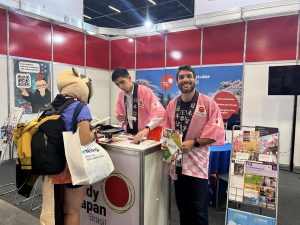
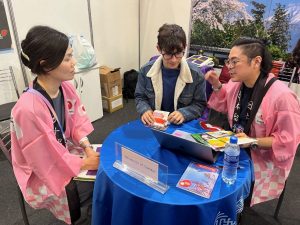
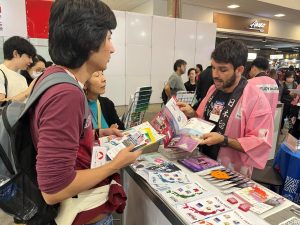
| From July 12 to July 14, “Study in Japan Fair” was held at the 25th Japan Festival in Sao Paulo, Brazil. The Fair was part of this year’s activities of the Global Network Project to Promote Study in Japan (South America Regional Office), a project that University of Tsukuba is entrusted from MEXT (Ministry of Education, Culture, Sports, Science and Technology of Japan). At the fair, a total of 18 Japanese educational institutions exhibited or distributed materials introducing their programs and courses. Among them, three institutions dispatched representatives from Japan to Sao Paulo to provide detailed explanations to visitors.
The Japan Festival in Sao Paulo is one of the largest Japanese festivals in the world that offers various cultural and food events every year. Kenjinkai, association of different Japanese prefectures, also have their booths. This year, the festival attracted approximately 184,000 people over the three days. Mizuho FUKUSHIGE, Deputy Director of South America Office, Tsukuba University was invited to participate in the opening ceremony of the festival. Since 2016, Study in Japan Fair in Sao Paulo has assisted the participation of Japanese educational institutions to reach out to prospective Brazilian students at the Sao Paulo Japan Festival. This year, about 1,000 people visited “Study in Japan” booth including those came from the states of Minas Gerais and Parana. In the presentation area, the Study in Japan team provided a total of four information-sharing sessions, and about 80 people participated in total. |

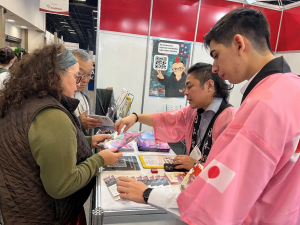
↑【”Study in Japan” booth at the 25th Sao Paulo Japan Festival】

| ↑【”Study in Japan” booth】 |

| ↑【”Study in Japan” consultation desk】 |

| ↑【”Study in Japan” booth】 |

| ↑【”Study in Japan” booth】 |

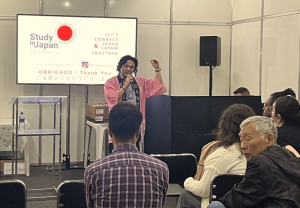
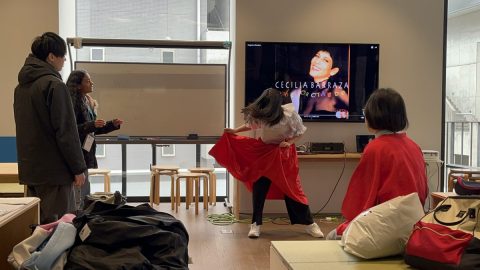
| ↑【Information-sharing sessions】 |
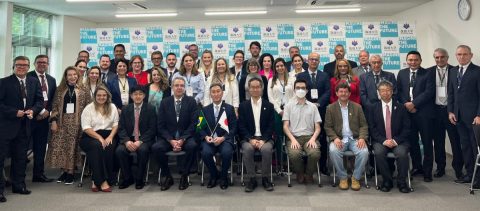
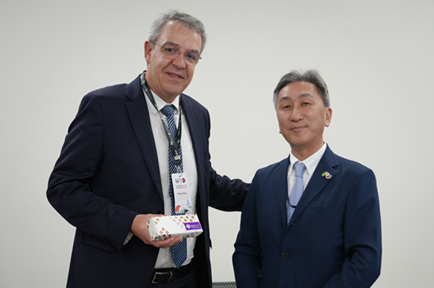
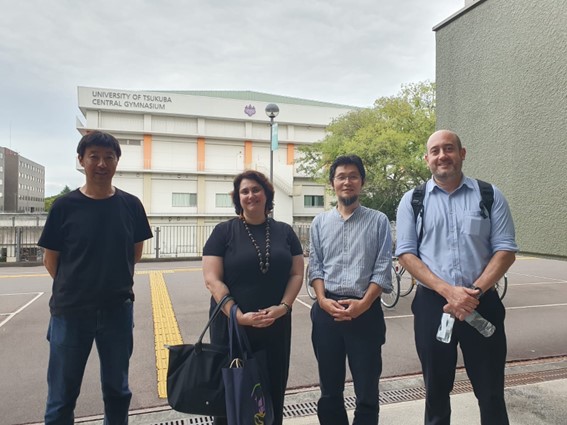
On May 20, a delegation of about 40 members from Brazilian Institution SEMESP (Sindicato dos Estabelecimentos de Ensino no Estado de Sao Paulo), led by Prof. Rodrigo Capelato, Executive Director of SEMESP and Prof. Alexandre Uehara of ESPM (Escola Superior de Propaganda e Marketing), visited University of Tsukuba. The delegation consisted of supporters, educational managers and faculty members in different academic fields from institutions of higher education in various Brazilian cities.
This visit was part of SEMESP’s annual international technical mission to overseas, which was scheduled from May 15 to May 28 to Japan this year. It aimed at acquiring new knowledge and exchanging international experiences that could contribute to renovating management and teaching at Brazilian institutions of higher educations.
Prof. OHNEDA (Executive Officer, and Director General of Bureau of Global Initiatives), Prof. SAKURAI (Director, Office of Global Initiatives) and Prof. MORIO (Office of Global Initiatives), Prof. MARCOS (Institute of Life and Environmental Sciences) and Prof. ARANHA (Institute of Systems and Information Engineering) received the delegation and provided the overview of University of Tsukuba focusing on acceptance of international students and support system for them, all-Japan “Study in Japan” project activities for South America since 2015, and JV-Campus, an online platform for higher education which the university has been taking the lead.
From SEMESP side, Prof. Capelato presented current status of institutions of higher education and trends of students wishing to pursue higher education in Brazil in recent years.
This visit is expected to strengthen the “Study in Japan” network with Brazilian institutions of higher education to attract more students to Japan in the future.


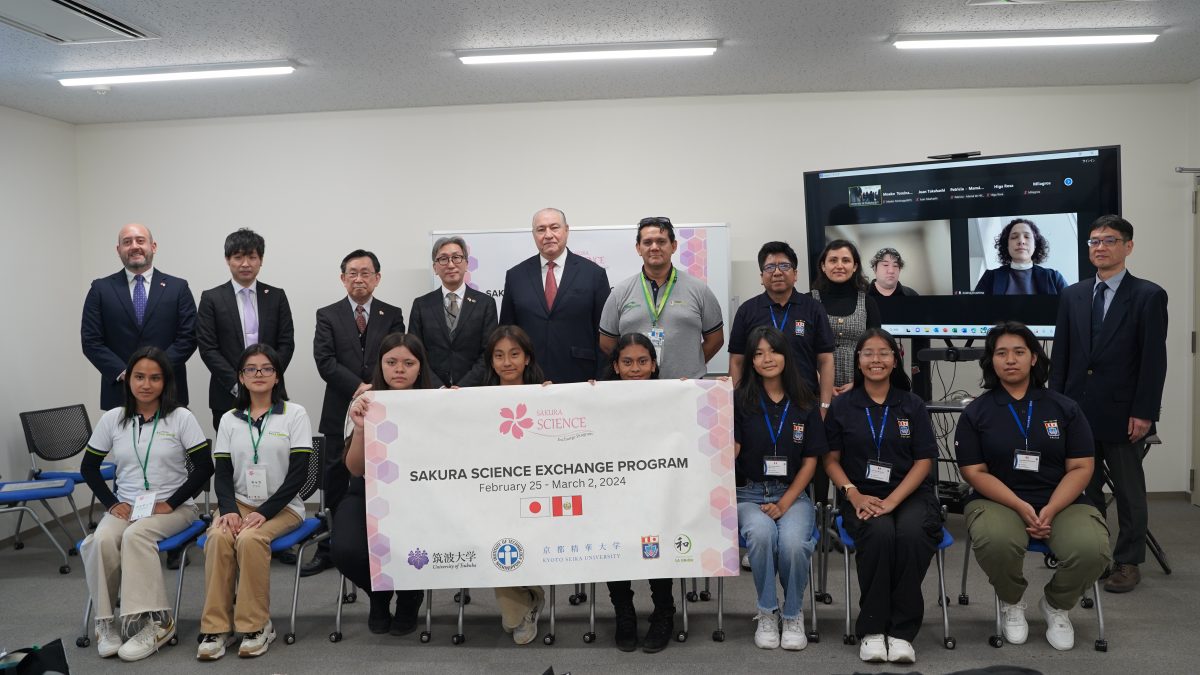
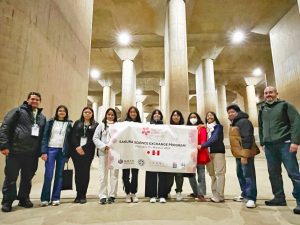
Thanks to the support of the Sakura Science Program, eight students and two accompanying teachers from La Unión and Jose Galvez Schools in Peru participated in a seven-day training program from February 25 to March 2, 2024. During the training, participants learned about cutting-edge disaster mitigation and disaster prevention science and technology, research, and initiatives in Japan, visited Japanese universities, and broaden their options for future career paths, including studying abroad in Japan.
The group arrived in Tsukuba City on the evening of February 25th and began their stay in Japan at the University of Tsukuba Global Guest House.
The opening ceremony was held with the presence of the Ambassador Plenipotentiary of Peru to Japan, Mr. Roberto Seminario and the attendance of six faculty members from University of Tsukuba, including Professor Osamu Oneda, Director of Bureau of Global Initiatives and Dr. Tadachika Koganezawa, Associate Professor, as well as Professor Yasunori Takemura, Assistant Professor Moeko Tominaga from Nishinippon Institute of Technology, and Associate Professor Andrea Urushima from Kyoto Seika University, which were the host universities for this training program. Additionally, parents of participating students from Peru attended online. After the ceremony, a meeting was held between the participating students and the Ambassador Seminario.


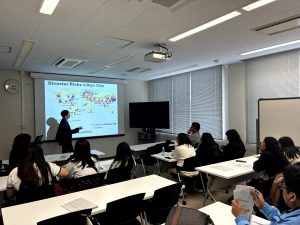
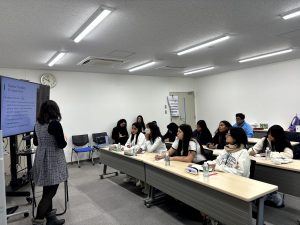
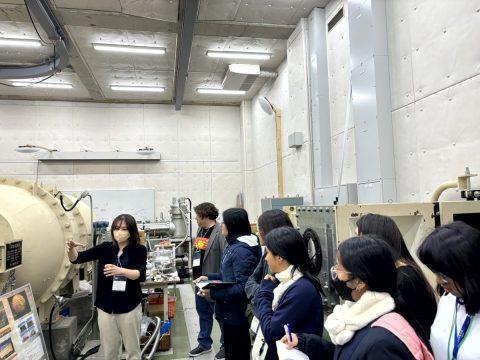
Following the ceremony, Assistant Professor Sandra Puentes introduced the university’s Bachelor’s Program in Interdisciplinary Engineering offered in English, followed by her own volunteer activities after the 2011 Great East Japan Earthquake and Tsunami. In the afternoon, Associate Professor Michitaka Umemoto of the University of Tsukuba’s Urban Disaster Prevention Laboratory gave a lecture on “Urban Planning and Disaster Management in Tsukuba Science City,” where participants learned about the cycle of disaster risk and “disaster prevention,” “disaster mitigation” through urban planning approaches, and construction and disaster prevention in Tsukuba Science City. On February 27, the participants visited “Michino-Eki Joso,” which opened in April 2023 in Joso City, the National Research Institute for Earth Science and Disaster Resilience in Tsukuba City, and the Metropolitan Area Outer Discharge Channel, one of the largest underground discharge channels in the world, developed by integrating the most advanced Japanese civil engineering technologies in Kasukabe City, Saitama Prefecture.
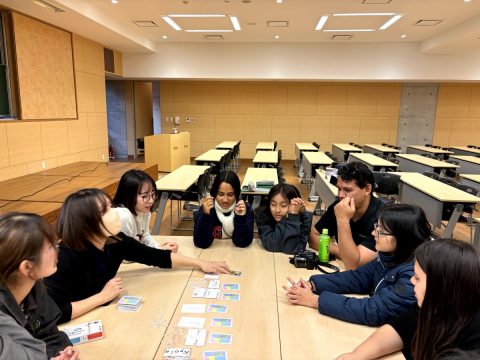
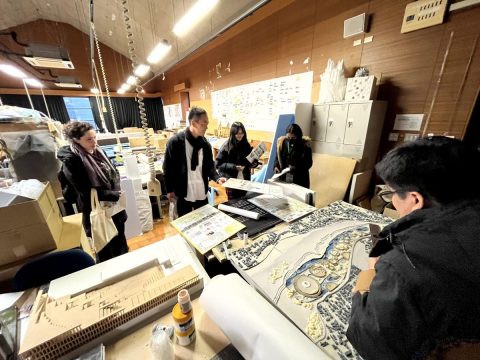
The delegation was split into two groups, with one staying in Kyoto and the other in Fukuoka from February 28 to March 2, for training sessions at Kyoto Seika University and Nishinippon Institute of Technology, respectively. The closing ceremony and certificate distribution took place on March 2, after which the students returned to Peru.


We extend our heartfelt gratitude to the JST Sakura Science Program for offering us this invaluable training opportunity. We aspire for the participating students to revisit Japan as international scholars, fostering continued exchange between our university and La Unión School and Jose Galvez School.
For more information, please refer to the Sakura Science Activity Report.
https://ssp.jst.go.jp/report/2023/
2024.2.22
| On February 22, 2024 (Thursday) we held the online study abroad fair for High School Students, University Students and Parents to attract potential candidates from the South American region. This fair was implemented as part of the Study in Japan Overseas Base Cooperation Promotion Project (South America) adopted by our university.
This online fair was conducted live on various platforms such as YouTube, Instagram and Facebook, having the streaming divided into two sessions, A and B, each moderated by a Brazilian and a Peruvian UIA from the University’s International Office. After welcoming JASSO staff to disseminate information on scholarships in the common session, faculty members from various universities, both public and private, and staff from Japanese language schools conducted brief introductions of their schools in Session A and B, respectively. At the same time, each participating institution in the fair opened their consultation booths on ZOOM to provide detailed information about their programs and faculties, and to answer the questions of the participants. The total number of viewers in both sessions was 5,160, and the maximum number of simultaneous viewers was 760. More than 1,000 people visited the ZOOM consultation booths which was perceived as a great success. Participating universities in Japan commented that they were able to meet directly with students and to inform them about university programs and opportunities, and that it was a valuable experience. It is expected that online fairs will continue to be actively held in the future. |

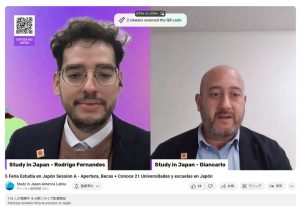
【 Greetings from the UIA of our University】

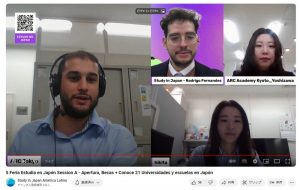
【 Introduction of ARC Japanese Language School 】

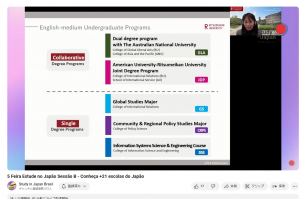
【Ritsumeikan University Presentation】

【Doshisha University Graduate School of Business zoom consultation booth】

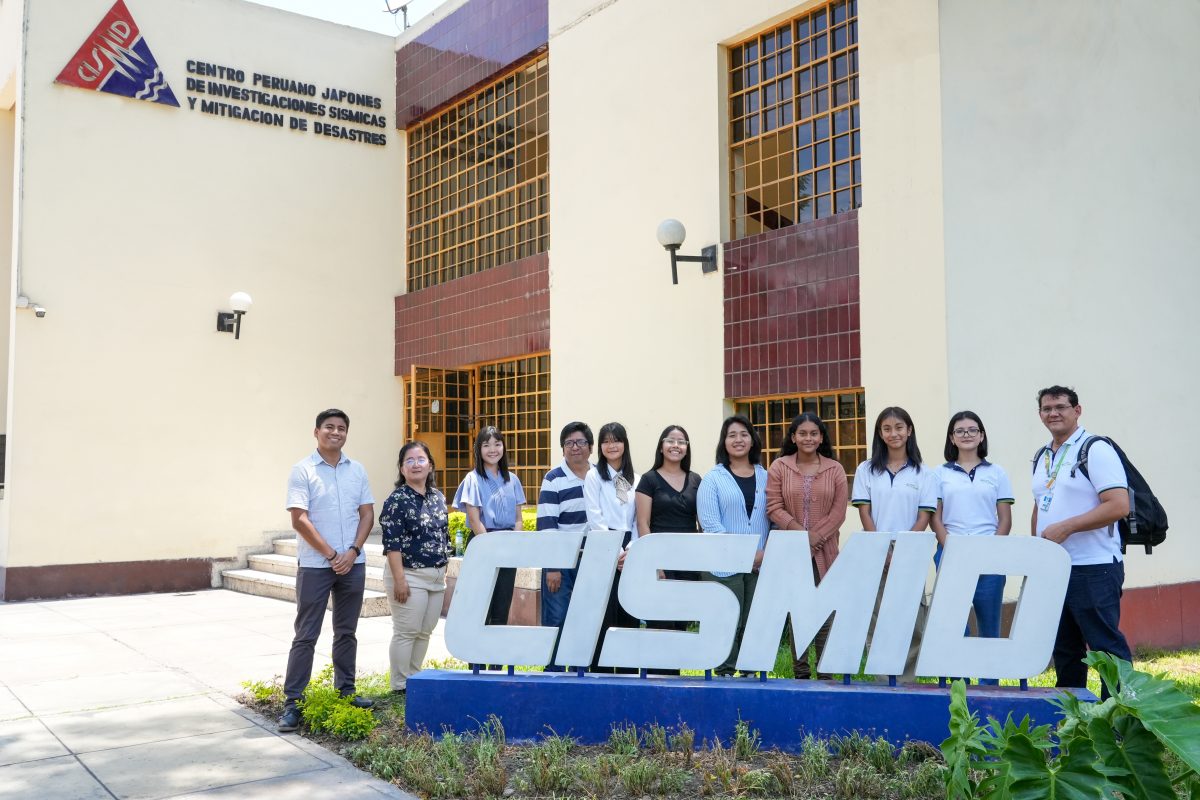
On Tuesday, February 6, 2024, JICA Peru and the Japan-Peru Earthquake Disaster Mitigation Center (CISMID)* jointly organized a pre-training session for the participants of the Sakura Science Program, who will visit Japan from February 25 to March 2, attended by six high school students from Jose Galvez School and La Union School, and three teachers. This workshop was requested by University of Tsukuba to JICA Peru as part of the Sakura Science Exchange Program training program which will start in Japan from February 25 to March 2, 2024.
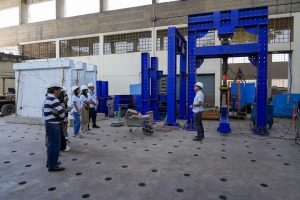
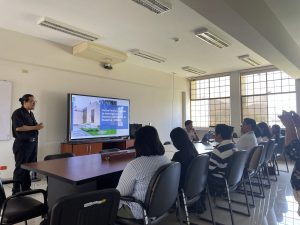
At the beginning of the workshop, Mr. Denis Sano of JICA Peru gave a presentation on the background of the request to conduct this program from the University of Tsukuba to JICA Peru and JICA’s cooperation in disaster management in Peru. Following CISMID’s efforts in the fields of soil, earthquakes, and structures were introduced by Dr. Edisson Moscoso, the group toured the Earthquake Monitoring Center, the Disaster Prevention Awareness Center, and the Structures Lab. It was impressive to see how earnestly the participating high school students and their teachers listened to these explanations.
CISMID has active members who have obtained master’s and doctoral degrees in Japan, and they spoke about their study abroad and career paths in Japan, providing a good opportunity for the participating high school students to broaden their options for their future career paths, including study abroad in Japan.
The group will leave for Japan on February 24 and arrive in Japan on February 25. They will begin their program in Japan on February 26, where they will learn about Japan’s cutting-edge science, technology, initiatives, and research on disaster mitigation and prevention, building on what they learned during their training in Peru. In addition, from February 28, students will be divided into two groups and visit either Kyoto Seika University or Nishinippon Institute of Technology for training and cultural experiences. It is hoped that this training will be a step forward in fostering human resources who will be responsible for future research and initiatives in the field of disaster prevention and mitigation in Japan and Peru.
*The Japan-Peru Earthquake Disaster Mitigation Center (CISMID) was established at the National University of Engineering of Peru with the cooperation of Japan to research and disseminate urban disaster prevention planning and disaster prevention technologies.


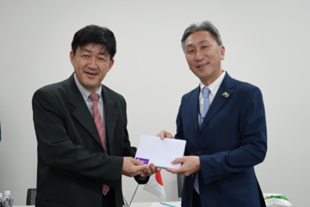
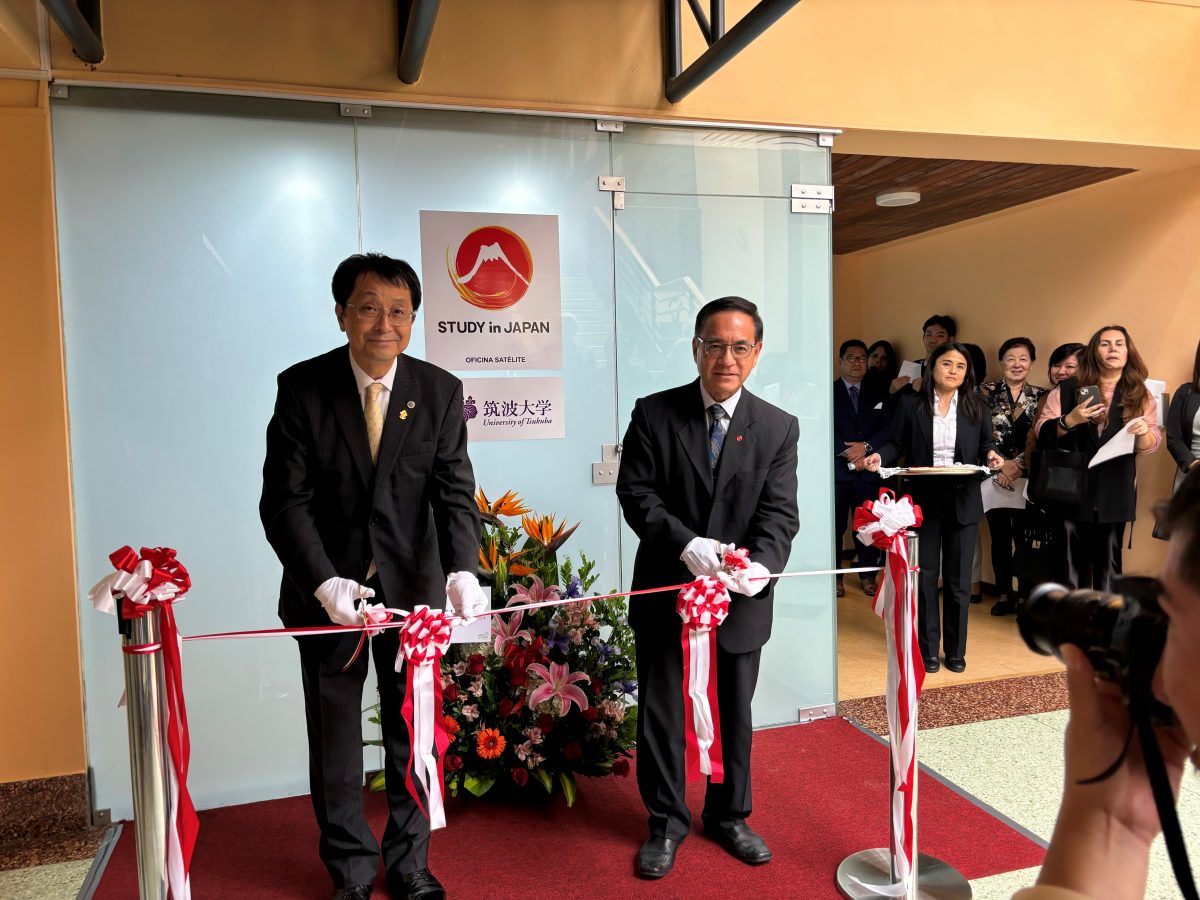
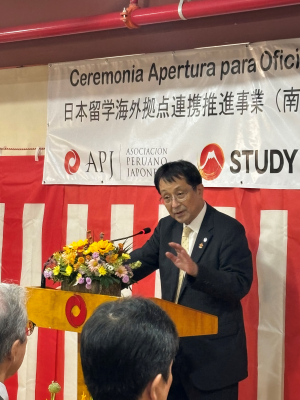
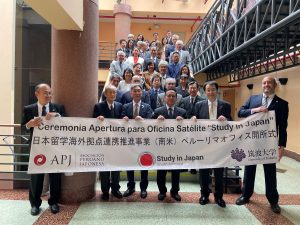
On November 6, the opening ceremony for for Peru’s 2nd Satellite Office “Study in Japan Global Network Project (South America)” and of the University of Tsukuba’s South America office was held at the Peruvian Japanese Cultural Center (CCPJ).
The opening ceremony was held following the signing of the agreement on March 14 to open an office in the CCPJ to promote activities related to the MEXT’s “Study in Japan Global Network Project (South America),” which the university has been selected as a project base in South America.
President NAGATA Kyosuke began by saying, “It is an honor for us to be able to conclude this agreement and hold the opening ceremony on this milestone occasion, which marks the 150th anniversary of the establishment of diplomatic relations between Japan and Peru. On behalf of our entire university, I would like to express our sincere and enthusiastic gratitude to all those who have given so much support to our university’s activities in Peru”. He also expressed his gratitude to all those involved for their generous support of the university’s activities in Peru. President Nagata stated, “We aim to attract more international students from Spanish-speaking countries, including Peru, and to provide opportunities for them to study Japanese language and culture in cooperation with universities and related institutions”.
Mr. Juan Carlos Nakasone Oshiro, President of the Peruvian Japanese Association, said, “This office is not only a physical space, but also a bridge between two cultures, a place for the exchange of academic knowledge and skills, joint research, and the promotion of joint cultural activities, as well as an important presence in the development of projects for the teaching and promotion of the Japanese language. It can also be an important presence in the development of projects for the teaching and dissemination of the Japanese language. The “Study in Japan” project, which is our primary focus, has the potential to offer Peruvian youth a great opportunity to study and to gain knowledge in Japan, a world leader in technology, research, science, culture, and other fields. We look forward to the positive impact this new endeavor will have in the future and hope that it will become a symbol of cooperation and friendship between Peru and Japan”. Afterwards, President Nagata and Chairman Nakasone cut the ribbon to celebrate the opening of the new office amidst a crowd of about 40 attendees.
With the establishment of the Satellite Office in the Peruvian Japanese Cultural Center, it is expected that the Satellite Office will be active in Peru and Spanish-speaking countries and will not only promote the acquisition of foreign students from Peru and Spanish-speaking countries, but will also help to further strengthen cooperation, especially in Japanese language education.


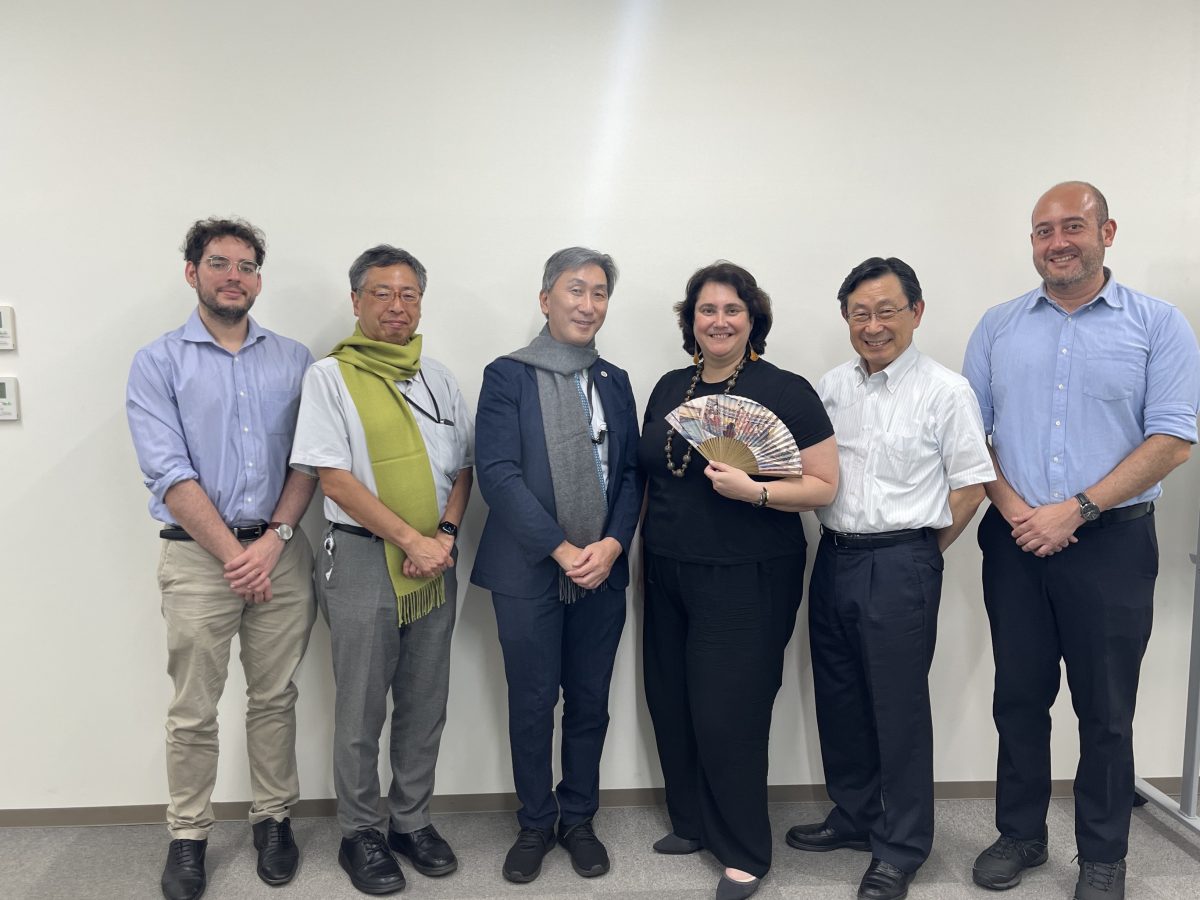
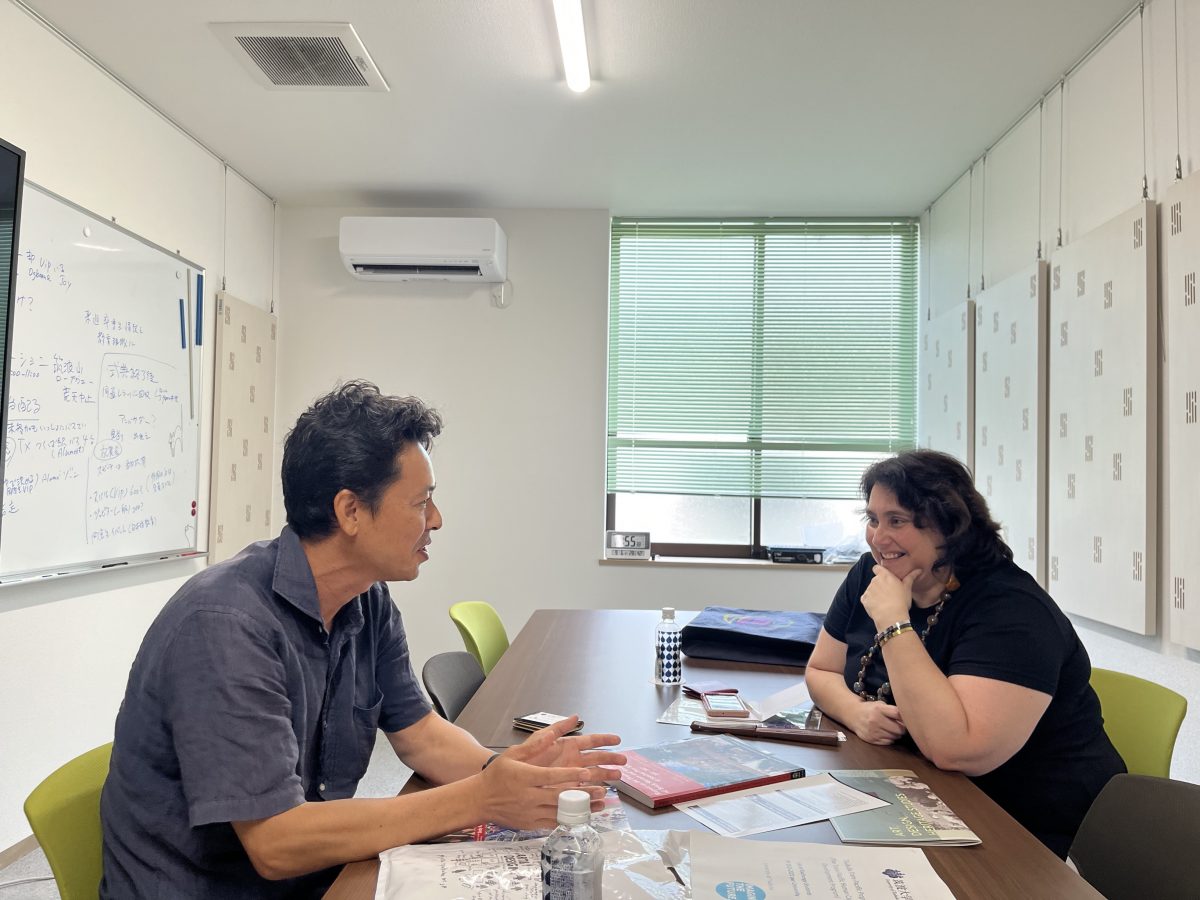
On Wednesday, September 6th, 2023, Professor Adriana Scaletti, Academic Director of International Affairs from Pontificia Universidad Católica del Perú (PUCP), visited UT and met with Professor Osamu Oneda, Director General of Bureau of Global Initiatives (BGI)/Director for South America, Professor Takahiro Morio, Professor of BGI, and Shigeo Osonoi, Professor Emeritus/Coordinator of Study in Japan (South America).
During the meeting, they exchanged views and opinions about the situation of student mobility after COVID-19, institutional activities to mutually promote study in Japan and Peru among their students, and upcoming Study in Japan fair to be held at Open PUCP in this November as part of the “Study in Japan (South America)” project commissioned by the Ministry of Education, Culture, Sports, Science and Technology of Japan (MEXT).
In addition, Professor Scaletti also had the opportunity to meet with other faculty members from UT. She met with Associate Professor Ichita Shimoda from the Heritage Studies program, Associate Professor Kyota Yamada, and Assistant Professor Osamu Kato from the Institute of Art and Design. With the acknowledgement of past student exchanges between both institutions, they discussed possibilities for reactivating researcher and student mobility, as well as encouraging participation in academic events centered on World Heritage and Architectural Design after COVID-19.
UT and PUCP signed the MOU in 2018 and have continued student/researcher exchanges and the implementation of Study in Japan fairs under the “Study in Japan (South America)” project.
We hope that this visit will lead to further enhancement of mutual exchange between UT and PUCP benefiting specially to the students in both countries.


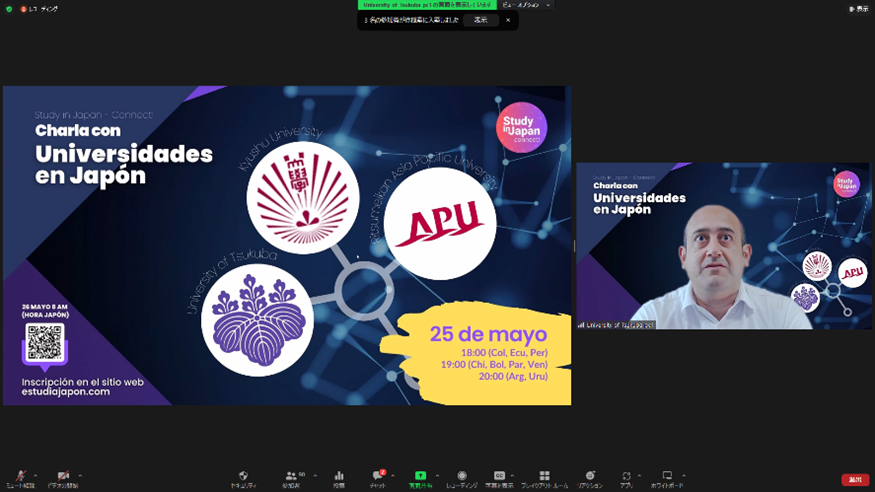
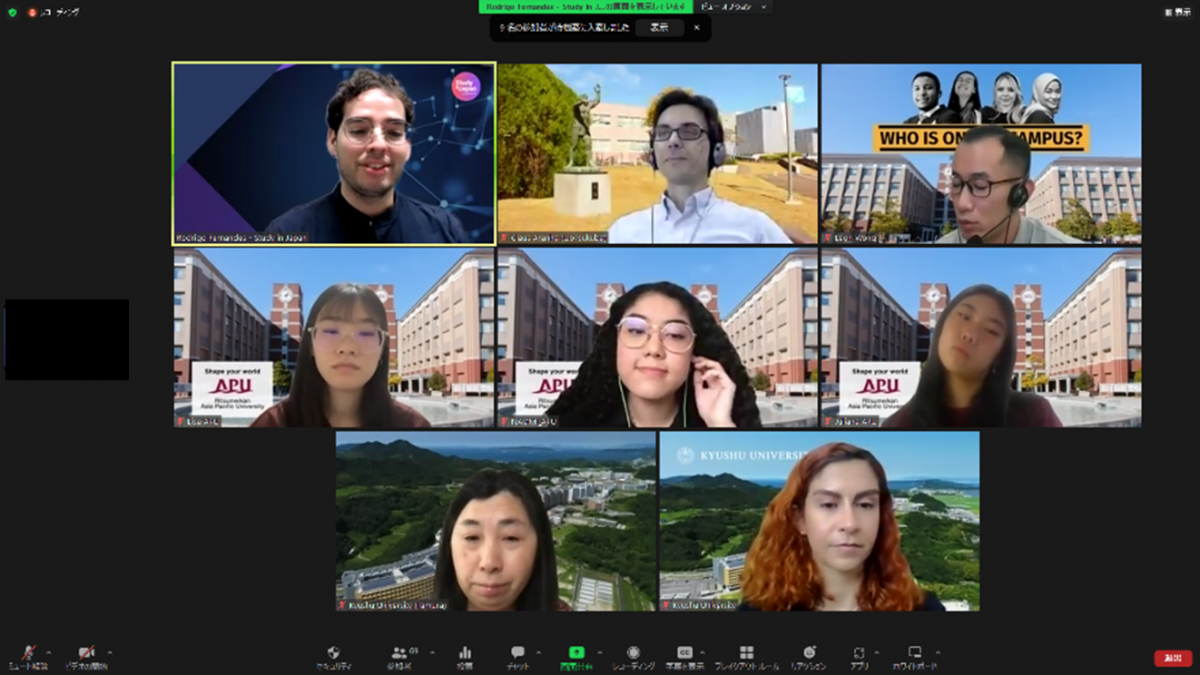
On May 26 and June 2, 2023, “Study in Japan Connect!,” webinars toward South American countries were held. These webinars were organized in response to a request to Study in Japan Global Network Project in South America from Kyushu University and Ritsumeikan Asia Pacific University (APU) that wish to implement student recruitment activities targeting the South American countries and regions where there are many Nikkei communities and prospective students.
Each webinar started off with the introductory presentation on studying in Japan presented by Drs. Giancarlo Carmelino and Rodrigo Fernandes, Study Abroad Sub-coordinators of the Study in Japan Global Network Project, respectively. In order of University of Tsukuba, APU, and Kyushu University, each university gave a 15-minute introductory presentation on each university.
Individual consultation rooms were then set up at each university utilizing breakout rooms to address questions and consultations from participants. Participants asked questions and asked for advice on scholarships and other financial aid, various degree programs, student life, and admission procedures. Parents also participated and asked questions, indicating the high level of their interest in studying in Japan as well as students.
Both webinars were a great success with approximately 150 participants from Peru, Colombia, Chile, Argentina, Mexico, and other countries, and with approximately 80 participants from Sao Paulo, Curitiba, Minas Gerais, Campinas, and other Brazilian cities.


On May 19, 2023, a study abroad webinar was held for Spanish-speaking countries and regions in South America as part of the project activities of Study in Japan Global Network Project (Study in Japan Project). The purpose of this webinar was to encourage potential students of Latin America to study in Japan by having international students from Latin America who are currently studying in Japan. The association representatives talked about their experiences and addressed concerns or questions from prospectives Latinamerican students who consider Japan as a study destination. Additionally, this event proposes the opportunity to repeat the session model with Latinamerican students from other Japanese universities to provide a more comprehensive image of studying in Japan by introducing their activities and initiatives. The first session introduced Association of Latin American Students of the University of Tsukuba (Latam UT).
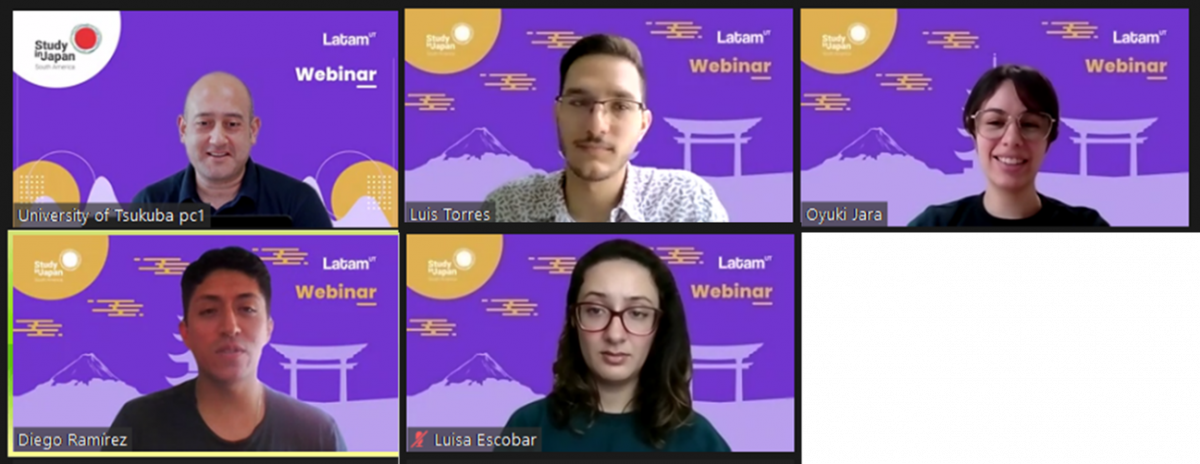
The webinar was moderated by Dr. Giancarlo Carmelino, project staff member and study abroad sub-coordinator, who gave an overview of the Study in Japan Project and explained about studying in Japan, followed by a roundtable discussion with four South American students currently studying at the University of Tsukuba about their motivation for studying in Japan, their degree fields, and student life. The webinar was attended by 73 participants and received 233 registrations.
The webinar was watched by 73 participants from Argentine, Bolivia, Chile, Colombia, Peru, etc., using chat system participants asked a wide range of questions about government scholarships, Japanese language and English language proficiency test scores, letters of recommendation, and other application procedures, etc., as well as about their desired field of study and culture shock in Japan.
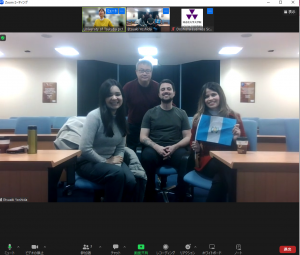
Upper From left: Dr. Giancarlo Carmelino, Vice Project Coordinator for Study in Japan project, Luis Torres (2nd year of Master’s, Venezuela), Oyuki Jara (1st year of Master’s, Paraguay);Lower from Left: Diego Ramirez (1st year of Master’s, Bolivia), Luisa Gatica (1st year of Master’s, Guatemala)